“When science meets fantasy involving time travel is where the storyline lives and shines.” – Red Sarah by Carol Ann Kauffman
Please feel free to share my blog:

“This was an amazing story full of romance and a chance encounter.” – Evangeline: A Christmas Romance by Angela Gray
Please feel free to share my blog:

This is the story of Jaq who went off to war, and Gill who could not follow after – Tumbling After: A Mother Goose Legend by Andi Lawrencovna
Please feel free to share my blog:

Why Every Blogger Should Ensure They’ve Attached Their Blog To Their Gravatar
Please feel free to share my blog:

Tuesday treat: A literary giant visits …

This is a bit of a turn up isn’t it? A blog post on a Tuesday. Except today, someone else is writing the blog post so I don’t have to! Woot. As I do from time-to-time,may I welcome Jim Webster’s alter ego and literary creation, Tallis Steelyard. Tallis, renowned poet and raconteur, literary giant of the Land of the Three Seas is here to amuse us with another of his stories. Over to you Tallis …
Everyone else … enjoy.
Such a sweet creature …
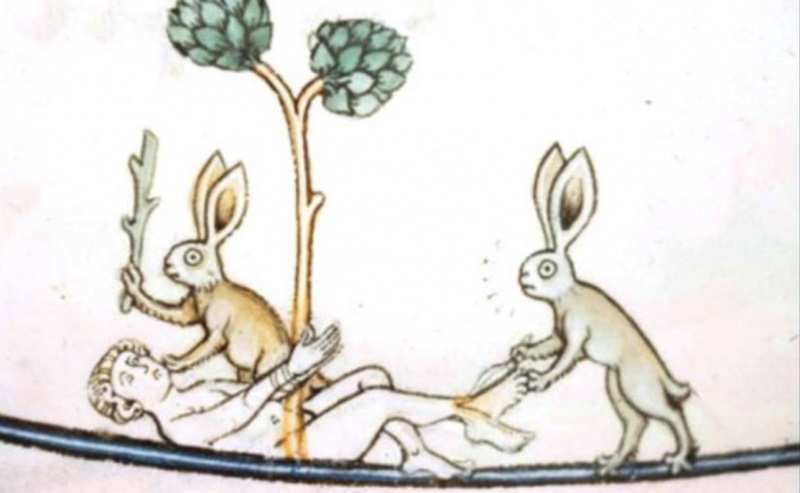
I cannot remember what brought Grubby Manly to mind. He was a sneak thief and had aspirations to become a burglar. I suppose it is in some way admirable that a chap might want to rise in the world but still in the case of Grubby, I think he’d have been better off reforming and trying to make a living as an honest citizen. Even…
View original post 1,263 more words
Please feel free to share my blog:
Keep Moving: Describe Your Setting on the Go – by Ann Harth…
 Chris The Story Reading Ape's Blog
 on Fiction University:
Finding the right balance between a fleshed-out setting and an under (or over) developed one can be tricky. Ann Harth shares a three-step plan for describing a setting that’s just right.
~~~~~
You’re reading through a scene at a blistering pace.
Peter, the young prince of Agapanthaland, is running for his life. The palace walls have been penetrated by an inhuman multi-fisted fiend. Its neck stretches, thrusting gnashing teeth after the sprinting boy. Prince Peter’s heart pummels his chest, his breath tears at this throat. He pounds down the hallway and bursts into the kitchen.
Rich broth bubbles in a copper pot on the black cast iron stove. Bunches of carrots, parsnips and celery lay beside a dark grey bowl on a wooden bench while herbs swing in clumps above, adding their spicy scent to the room’s meaty aroma. The bench has been well used, scarred by…
View original post 68 more words
Please feel free to share my blog:

Story Structure: How The Climax Works in a Novel – by Janice Hardy…
Chris The Story Reading Ape's Blog
on Fiction University:
The climax resolves the plot problem and makes readers glad they picked up the novel. There’s a popular series* with a climax that made me so furious I stopped reading that author. Until that moment, I’d devoured all eight books, loved them, and in that last 10% of the final book, the author had the protagonist make a decision that invalidated the entire series and made me go from “Yes, I want you to win!” to “You don’t deserve the victory what the heck were you thinking???”
I was livid. I had to stop reading and call my niece (we were reading the series together) and we hashed out how awful this ridiculous decision was. I gritted my teeth and dived back in to finish it, and then watched in horror as the story I’d loved dissolved into a pointless, deus ex machina ending.
This is not
View original post 34 more words
Please feel free to share my blog:

10 Grammar Checkers and Editing Tools to Make Your Writing Super Clean – by Amanda Shofner & Farrah Daniel…
Chris The Story Reading Ape's Blog
 Amanda Shofner & Farrah Daniel
on The Write Life:
Have you ever wanted a magical editing wand?
Just imagine: A flick of the wrist is all that would stand between you and the end of editing your writing. No frustration. Minimal time investment. An amazing manuscript or blog post.
Alas, no such magic wand exists.
But we do have grammar checker tools, which are the next-best things.
Just remember grammar checkers are designed to make editing easier, not to eliminate the work completely.
Continue reading HERE
Please feel free to share my blog:

5 Ways To Describe A Character Without Using The Clichéd Mirror Look

Just as book trends see certain genres fall in and out of favor, there are certain elements of books that once worked but now no longer do.
One such example is the clichéd mirror look, aka when the author has the MC look in a mirror and describe themselves so the reader knows how they look.
Yep, writers used to do this all the time, and when you’re a wannabe writer and you see this trick used in all the big-time published books, it works its way into your own writing.
But there are better options to get the physical description of your main character to the reader, as these 5 ways show…
5 Ways To Describe A Character Without Using The Clichéd Mirror Look
1. Through The Lens Of Other Characters
This of course only works if your book uses multiple POV’s. If it does, have the other characters
View original post 582 more words


 Viv Drewa - The Owl Lady